
1. Pan(Personal Area Network)
2.LAN(Local Area Network)
3.WAN(Wide area network)
4.WLAN(Wireless local are network)
5.CAN(Campus area netwwork)
6.MAN(Metropolitan)
7.SAN(Storage are network)
8.SAN(System area network)
9.Polan(Passive optical local area network)
10.EPN(Enterprize private network)
11.VPN(Virtual private network)
The range of a PAN typically is a few meters. Examples of wireless PAN, or WPAN, devices include cell phone headsets, wireless keyboards, wireless mice, printers, bar code scanners and game consoles. Wireless PANs feature battery-operated devices that draw very little current

A wide area network is a telecommunications network that extends over a large geographic area for the primary purpose of computer networking. Wide area networks are often established with leased telecommunication circuits.
The first examples of WANs included circuit-switched telephone lines, but advances in technologies now include wireless transmissions and fiber-optic transmissions. Data can also be moved via leased lines, or even via satellite transmission.
The best example of a Wide Area Network is the Internet itself. Other smaller examples of WANs are: A network of bank cash dispensers; A Company network with several branch offices geographically distant.
WLAN wireless local area network
Wi-Fi is an example of WLAN where devices are connected wirelessly within a limited range. WLAN is made within home, office building, computer laboratory, school building or any college campus. For using Wi-Fi, users need to enter a password for making a connection to the internet.
A wireless LAN (WLAN) is a wireless computer network that links two or more devices using wireless communication to form a local area network (LAN) within a limited area such as a home, school, computer laboratory, campus, or office building.
As wireless devices have grown in popularity, so have WLANs. ... This includes laptops, tablets, smartphones, and other wireless devices, such as smart appliances and smart home controllers. Wireless routers often connect to a cable modem or other Internet-connected device to provide Internet access to connected devices
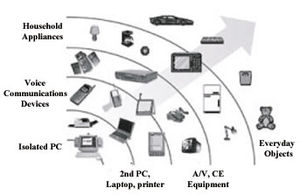
Both Wi-Fi (wireless fidelity) and WLAN (wireless local area network) mean the same — they both refer to a wireless network that can transfer data at high speeds. ... You can also set a name for your Wi-Fi network and assign a password to it for security.
A campus network, campus area network, corporate area network or CAN is a computer network made up of an interconnection of local area networks within a limited geographical area.
A campus area network is larger than a local area network LAN since it may span multiple buildings within a specific area. ... They operate similar to LANs, in that users with access to the network (wired or wireless) can communicate directly with other systems within the network.
A metropolitan area network is a computer network that interconnects users with computer resources in a geographic region of the size of a metropolitan area.
Examples of a MAN are the part of the telephone company network that can provide a high-speed DSL line to the customer or the cable TV network in a city. WAN or Wide Area Network is a computer network that extends over a large geographical area, although it might be confined within the bounds of a state or country.
A Storage Area Network (SAN) is a specialized, high-speed network that provides block-level network access to storage. SANs are typically composed of hosts, switches, storage elements, and storage devices that are interconnected using a variety of technologies, topologies, and protocols.
A Storage area network (SAN) is a dedicated network that provides access to data storage and operations only on the block level. SANs are widely used for enhancing the storage devices (optical jukeboxes, disk arrays, tape libraries) that are accessible for networked servers
System area networks are high-performance,
connection-oriented networks that link computer clusters.
Microsoft SQL Server 2005 uses it for high-performance connectivity through
Virtual Interface Adapter. This technology is used since the advent of Windows 2000. Wikipedia
A system area network (SAN) is a high-performance,
connection-oriented network that can link a cluster of computers.
A SAN delivers high bandwidth (1 Gbps or greater) with low latency. A SAN is typically switched by hubs that support eight or more nodes
The network setups in a LAN (Local Area Network) where PON is used may be called as a POLAN (Passive Optical Local Area Network). ... In an active optical network, electrically powered switching elements are used. These elements manage the distribution of the signal to specific customers.
Passive optical LANs (POLANs) are adapted to indoor network architectures, and can decrease the amount of cable and equipment required to deploy a network. POLANs are ideal if several networks need to converge, a discrete network is required or centralized management is
desired – or if there is little room for cabling.
An enterprise private network is a computer network that helps enterprise companies with a number of disparate offices connect those offices to each in a secure way over a network. An enterprise private network is mainly set up to share computer resources.
A client-based VPN is a virtual private network created between a single user and a remote network. ... The user
then has access to the remote network via the encrypted tunnel. Examples of
client-based VPN applications include Cisco's AnyConnect,
Pulse (formerly Juniper), and Palo Alto Networks' GlobalProtect.
A virtual private network, or VPN, is an encrypted connection over the Internet from a device to a network. The encrypted connection helps ensure that sensitive data is safely transmitted. It prevents unauthorized people from eavesdropping on the traffic and allows the user to conduct work remotely.
A virtual private network extends a private network across a public network and enables users to send and receive data across shared or public networks as if their computing devices were directly connected to the private network.
Using a VPN to connect to the internet allows you to surf websites privately and securely as well as gain access to restricted websites and overcome censorship blocks. VPNs aren't just for desktops or laptops -- you can set up a VPN on your iPhone, iPad or Android phone, too.